
Written by Jay: I’ve spent 10+ years buying and removing vehicles NZ-wide, andd these days I’m based out of our Frankton yard with Car Wrecker Hamilton, covering Hamilton first, then Tauranga, Rotorua, and New Plymouth (plus the wider Waikato, Bay of Plenty, and Taranaki regions).
There’s usually a moment when a car stops being worth sorting out and starts becoming a headache.
It might be the old hatchback that’s been parked up for months. It might be the ute that failed its WoF again. It might be a flood-damaged SUV, a deregistered van, or a non-runner with engine trouble that nobody in the family wants to deal with. Whatever the story, most people asking about vehicle disposal are really asking one thing:
How do I get rid of this thing quickly, legally, and without turning it into a full-time mission?
After more than 10 years buying and removing vehicles around New Zealand, I can tell you this: the best option usually comes down to how much time, effort, and uncertainty you’re willing to wear. If you want a clean, fast result, professional car removal is often the simplest path.
At Car Wrecker Hamilton, that’s exactly what we do. We buy vehicles in all sorts of conditions, offer up to $12,000 depending on the vehicle, provide free removal, and can often organise same-day pickup from Hamilton, Tauranga, Rotorua, New Plymouth, and across Waikato, Bay of Plenty, and Taranaki.
What’s the easiest way to get rid of a vehicle in NZ?
The easiest way to get rid of a vehicle in NZ is usually to sell it to a car wrecker or cash for cars buyer who can remove it from your place, pay you on pickup, and help with the paperwork. That suits old, damaged, non-running, deregistered, and unwanted vehicles especially well.
Vehicle disposal usually means getting rid of a car you no longer want to repair, register, store, or sell privately.
In real life, most owners have three options. They can sell privately, trade it in, or sell it to a specialist buyer such as a car wrecker, auto wrecker, or vehicle removal company. Private sales can work well for tidy, roadworthy vehicles with decent demand. But once a car has major damage, expired rego, no WoF, mechanical issues, or has simply become a nuisance, the private market usually gets slow and messy.
That’s where a direct buyer makes life easier. Instead of paying for towing, answering endless messages, or having random people turn up at your driveway, you get one quote, one pickup, and one handover.
Example: If you’ve got an old Corolla in Hamilton that won’t start and has been sitting on the lawn for six months, listing it privately can drag on. A removal service can quote it as-is, tow it away for free, and sort the handover on the same day.
Is it better to scrap a car, dispose of it, or sell it privately?
If the vehicle is tidy, legal, and easy to drive away, a private sale can bring more money. But if it’s damaged, non-running, deregistered, unsafe, or not worth fixing, scrapping or selling it for removal is usually the smarter and faster option.
“Scrapping” a car usually means selling it for parts, metal recovery, or dismantling. Disposing of a car is the wider idea of removing it legally and practically. A private sale means finding your own buyer and managing everything yourself.
Here’s the framework I use with sellers every day:
- Sell privately when the car is roadworthy, presentable, and likely to attract normal used-car buyers.
- Sell to wreckers or car buyers when the car still has value, but the private-sale hassle is bigger than the extra dollars.
- Dispose/scrap it when the vehicle is beyond economical repair, unsafe, incomplete, or more valuable in parts and scrap than as a normal used car.
This is where a lot of owners get stuck. They think, Maybe I should try Trade Me first. Fair enough. But if the car has no rego, no WoF, crash damage, overheating, gearbox issues, or it’s been off the road for ages, you’re often not dealing with a normal buyer market anymore.
Example: A tidy 2016 SUV with current rego and WoF might be worth selling privately. A fire damaged 2010 van with a dead transmission is usually better sold to a buyer like Car Wrecker Hamilton, where the value is in salvage, parts, and scrap recovery.
What affects how much you’ll get for vehicle disposal or car removal?
The value depends on the vehicle’s make, model, age, condition, demand for parts, metal weight, and how easy it is to collect. Running vehicles usually bring more, but even old scrap cars, damaged utes, vans, trucks, and deregistered vehicles can still have real value.
Vehicle value is not just about whether the car drives. It’s about what the vehicle is worth in the current market as a complete unit, for parts, or as scrap.
The main factors I look at are:
- make and model
- demand for parts in New Zealand
- whether it runs or not
- accident, flood, or fire damage
- engine, gearbox, and drivetrain condition
- missing parts
- tyre and battery condition
- whether the car is complete
- location and access for pickup
A lot of people assume an old car is worth nothing. That’s often not true. Even when a car isn’t worth fixing, it can still hold value in reusable parts, metal, wheels, batteries, catalytic components, panels, and drivetrain pieces.
At Car Wrecker Hamilton, offers can range from smaller cash payments for rough scrap cars right through to up to $12,000 for better-value vehicles, depending on condition and market demand.
Example: A late-model accident-damaged ute in Rotorua may still attract a strong offer because its parts are in demand. A tiny non-running hatch with rust and missing bits may bring a lower amount, but removal can still be worthwhile because you avoid towing and disposal costs.
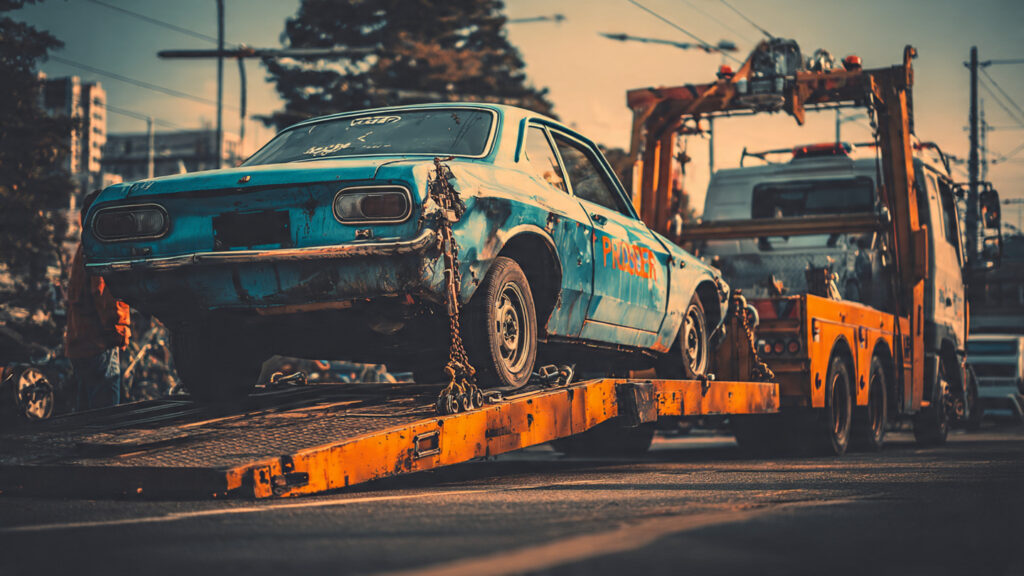
What types of vehicles and conditions can be bought for removal?
Most professional wreckers and car buyers will buy more than just old cars. That includes vans, SUVs, 4x4s, utes, trucks, commercial vehicles, and even campers. They also buy vehicles in rough condition, including scrap, damaged, flood-affected, fire-damaged, non-running, and deregistered vehicles.
Vehicle removal is not only for junk cars. It suits all sorts of vehicles that are hard to sell through ordinary channels.
At Car Wrecker Hamilton, the common vehicle types include:
- cars
- vans
- SUVs
- 4x4s
- utes
- trucks
- commercial vehicles
- campers
And the common conditions include:
- used and high-km vehicles
- old cars
- scrap cars
- accident-damaged vehicles
- flood-damaged vehicles
- fire-damaged vehicles
- engine or gearbox problems
- non-runners
- deregistered vehicles
- vehicles with no WoF or no rego
That’s why this type of service works so well for busy owners. You don’t need to spend money making the vehicle look good enough for the internet. You just need to be honest about what it is.
Example: I’ve bought everything from work vans with blown motors in Tauranga to deregistered 4x4s in Waikato and damaged family cars in New Plymouth where the owner just wanted the driveway back.
Why do so many owners choose vehicle removal instead of selling privately?
People choose vehicle removal because it saves time, cuts out risk, and avoids the usual private-sale drama. You don’t need to create listings, deal with no-shows, organize test drives, or explain every fault to a dozen different people. It’s a cleaner, quicker handover.
Convenience matters. The best sale is not always the one with the theoretical highest price. It’s often the one that actually gets done without stress.
This is the bit many sellers underestimate. Private selling sounds simple until you’re living it:
- strangers messaging at all hours
- buyers haggling before they’ve even seen the car
- people asking whether it will just pass a WoF
- no-shows
- test drives
- tow costs if the car doesn’t run
- uncertainty around ownership paperwork
For damaged, old, or non-running vehicles, convenience becomes a huge part of the value.
With Car Wrecker Hamilton, you’re dealing with a local team, a Frankton yard, and a network that’s been buying and removing vehicles for 10+ years. That means fewer delays, better market knowledge, and a more practical approach.
Example: If you’re a busy parent in Hamilton East or you’ve got a broken work ute parked at a business in Te Rapa, getting one call sorted and having it gone today is often worth more than chasing maybe an extra few hundred on the private market.
What should you know about WoF, rego, and ownership when disposing of a vehicle in NZ?
You can still sell a vehicle that has no WoF, overdue rego, or is unregistered, but the process depends on how the vehicle is being sold. If you’re disposing of it through a wrecker, the key thing is making sure the handover and NZTA notification are handled properly.
In New Zealand, the legal side of selling or disposing of a vehicle is separate from whether the car is worth money.
A few key points matter here:
The Ministry of Transport says if you have an unwanted vehicle, you can take it to a vehicle recycler or wrecker, and if it’s a registered vehicle being sold as scrap, you need to contact NZTA.
NZTA says both buyer and seller need to notify the change when a vehicle is sold or otherwise disposed of, and sellers should do this straight away so they do not get stuck with later fees or fines.
NZTA also says that in a normal private sale, the vehicle should have a WoF or CoF less than one month old unless both sides agree otherwise, ideally in writing. It also notes that if a vehicle is no longer roadworthy and you’re selling to a wrecker, deregistration may be required depending on the situation.
If the registration is being cancelled, NZTA says only the registered person or insurer can request it, and cancellation involves the MR15 process, ID, plates, and an administration fee.
Example: If your car has no WoF, no rego, and can’t legally be driven, that doesn’t automatically stop the sale. It just means you need to treat it as a non-roadgoing handover and make sure the paperwork is done properly. That’s one reason many sellers prefer using an experienced vehicle buyer who can talk them through it.
Can you get vehicle removal outside Hamilton?
Yes. While Hamilton is the core service area, vehicle removal also makes sense across the wider Waikato, Bay of Plenty, and Taranaki regions. That includes places like Tauranga, Rotorua, and New Plymouth where owners still want fast pickup, fair pricing, and a simple process.
Local relevance matters because pickup speed, transport cost, and buyer coverage can affect both convenience and value.
Car Wrecker Hamilton is built around Hamilton, but the service naturally extends across nearby regions because that’s how vehicle buying works in practice. Some jobs are city pickups, others are rural, trade, or regional jobs where the owner simply wants the vehicle gone without organizing transport.
This wider coverage matters for owners who:
- live outside the main centre
- have a vehicle stuck at home, work, or a workshop
- need help with a non-runner
- want one buyer who can handle the full process
Example: A damaged car in Tauranga, a dead van in Rotorua, or an old ute in New Plymouth may still be a straightforward pickup when you’re dealing with a buyer that already services those regions.
What does the process look like with Car Wrecker Hamilton?
The process is simple: get a quote, book a pickup, hand over the vehicle, and get paid. For most owners, that means no towing bill, no back-and-forth with strangers, and no guessing about what happens next. It’s designed to be quick, practical, and low-stress.
Good vehicle removal should feel clear from the first phone call.
The usual flow is:
- Call 0800 99 7000 or request a quote
- Share the basics like make, model, condition, and location
- Receive an offer based on the vehicle and current demand
- Book pickup, often the same day
- Get paid on collection and let the team help with the paperwork
- That’s the part sellers appreciate most. You’re not left figuring it out on your own.
Example: If your old car is sitting in Frankton, Dinsdale, Rototuna, Cambridge, Tauranga, or Rotorua, you can often go from I need this gone to done and paid without losing your whole day to it.
Ready to get rid of your vehicle today?
If you want the fastest, cleanest way to move on from an old, scrap, damaged, or unwanted vehicle, call a buyer who can actually remove it, pay fairly, and sort the handover properly. That’s exactly what Car Wrecker Hamilton is set up to do.
I’ve been around this industry long enough to know most people don’t want a complicated sale. They want a fair offer, a straight answer, and a pickup that happens when it says it will.
That’s why Car Wrecker Hamilton works well for so many sellers:
- top cash offers up to $12,000 depending on the vehicle
- same-day pickup available
- free vehicle removal
- paperwork handled
- experienced local team based in Frankton
- service across Hamilton, Tauranga, Rotorua, New Plymouth, Waikato, Bay of Plenty, and Taranaki
Call 0800 99 7000 or get a free quote at to line up a same-day pickup, a top cash offer, and a genuinely hassle-free process.
Suggested Reads:
- Scrap car value guide: How much is my scrap car worth in NZ?
- Where to get the most money for selling a car: Where do I get the most money for selling my car?
- Unwanted car removal service page: unwanted car removal in Hamilton
- Scrap car removal Hamilton page: scrap car removal Hamilton
- Sell my car Hamilton page: sell my car in Hamilton
- Sell damaged car page: sell a damaged car
FAQs:
How much can I get for scrapping my old car?
The amount depends on the make, model, condition, parts demand, and whether the vehicle is complete. Some scrap cars only bring a modest amount, while better vehicles or late-model damaged cars can bring much more. The quickest way to know is to get a real quote based on your exact vehicle.
If the car still has desirable parts, decent metal weight, usable wheels, or a recoverable drivetrain, it can be worth more than owners expect.
What’s the quickest way to get rid of a car?
The quickest option is usually to sell it to a car removal or cash for cars service that can quote, collect, and pay in one go. That’s especially true if the car is not running, has damage, or you do not want to deal with private buyers.
For most sellers, speed comes from removing steps, not adding them.
Can I sell a car without WoF or rego in NZ?
Yes, you can still sell a car without a current WoF or rego, but how you do it matters. In an ordinary private sale, NZTA says there are rules around WoF timing unless both sides agree otherwise, and change of ownership details still need to be handled properly.
For rough or non-roadworthy vehicles, many owners choose a wrecker or direct buyer because the process is more practical.
Who buys damaged cars?
Car wreckers, auto wreckers, and specialist car buyers are the usual buyers for damaged cars. They buy accident-damaged, flood-damaged, fire-damaged, non-running, and mechanically faulty vehicles that are difficult to sell through normal private-sale channels.
That includes cars, vans, SUVs, 4x4s, utes, trucks, and commercial vehicles.
Is it better to scrap or sell a car?
It depends on the condition. If the vehicle is tidy, legal, and wanted by normal buyers, selling it can make sense. If it is badly damaged, deregistered, unsafe, or not worth repairing, scrapping it or selling it for removal is often the better call.
The best option is usually the one that balances money, time, and hassle.
Do wreckers remove cars for free?
Many do, but not all services are equal. A good operator should tell you upfront whether towing is included, whether pickup is same day, and what paperwork help is available. Car Wrecker Hamilton offers free vehicle removal as part of the service.